
Strip, seal, refinish
Strip and wax floor care.
A commercial floor that looks permanently dull usually is not damaged. It is carrying years of finish with dirt sealed into each layer that no amount of mopping will lift. Stripping takes all of that back to the tile and rebuilds it. It is disruptive, slow, and has to cure properly, which is why it is scheduled overnight or across a closure rather than squeezed into a routine visit.
5.0 ★★★★★ 100 Google reviews as of October 10, 2026 · Serving the Fraser Valley · View Google profile
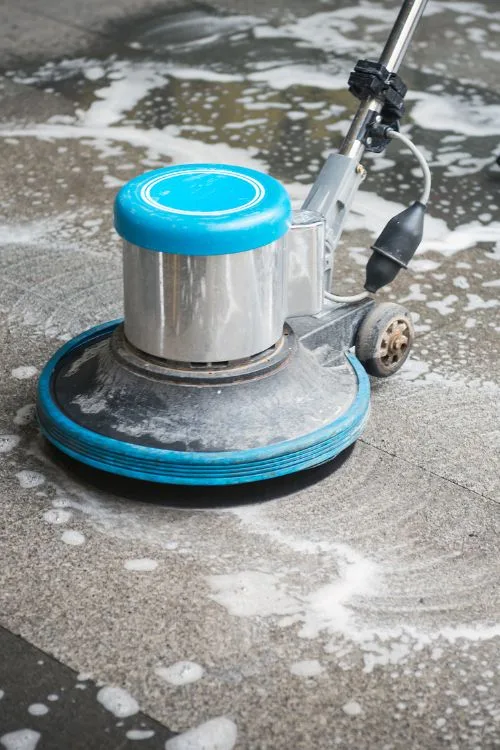
What the job includes.
Full strip to the substrate
Old finish and sealed-in soil removed completely rather than recoated over.
Neutralise and rinse
Stripper residue neutralised, because finish will not bond to a surface left alkaline.
Sealer coats
Applied to porous surfaces so the finish sits on a stable base rather than soaking in.
Multiple finish coats
Built up in thin layers with dry time between. The layer count decides the gloss and durability.
Edges, corners and under fixtures
Hand-worked where a machine cannot reach, which is where poor jobs are obvious.
Maintenance burnishing
Scheduled between strips so the finish lasts years rather than months.
How it runs.
-
Scheduled for a real closure
Overnight or across a weekend. Finish needs uninterrupted cure time and foot traffic ruins it.
-
Zone by zone in live buildings
Sections completed and returned to service one at a time where the building cannot fully close.
-
Cure before traffic returns
Light foot traffic after the stated cure; heavy equipment and rolling loads later still.
What changes the price.
Quotes are free and given in writing after we have seen the space. These are the things that actually move the number.
Floor area and layout
Edges, corners and under-fixture work are hand-done and slower than open floor.
Coat count
More finish coats mean more gloss and durability, and more dry time between them.
Closure window
A full closure is quicker overall. Zone-by-zone work in a live building takes longer.
Questions we get asked.
How often does a floor need stripping?
Every one to three years depending on traffic, with regular burnishing in between. Frequent burnishing on a well-maintained finish pushes the next strip a long way out.
How long does the floor need to stay closed?
Plan on the space being out of use overnight at minimum. Light foot traffic is usually fine after 8 to 12 hours; rolling loads and heavy equipment need longer.
Which floors can be stripped and waxed?
VCT, vinyl, some sealed concrete and certain tile. Not hardwood, laminate, LVT with a factory wear layer, or unsealed stone. The wrong treatment on those does permanent damage.
Can you do this without closing the building?
Yes, zone by zone overnight. Each section is finished, cured and back in service before opening, which takes longer overall but avoids a full closure.
Often booked together.



Free written quote